Spironolactone
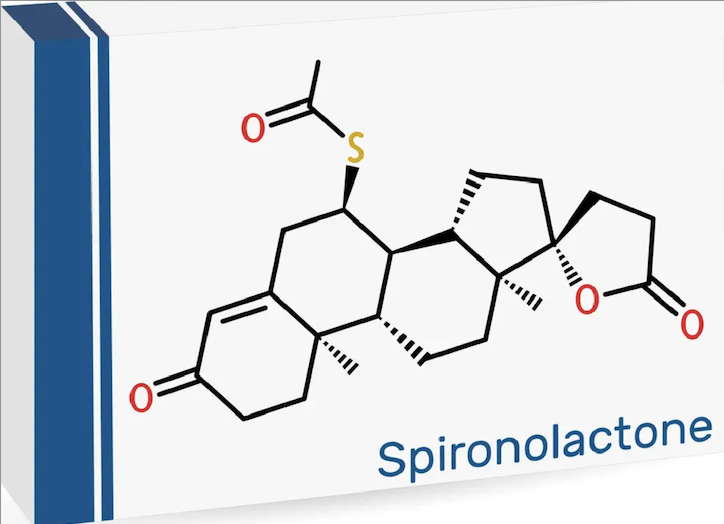
Spironolactone is a prescription medication traditionally used as a potassium-sparing diuretic to treat conditions such as high blood pressure, heart failure, and fluid retention. In dermatology and hair-loss contexts, it is frequently prescribed—especially for women—for acne, hirsutism, and androgen-related hair loss. Its usefulness in these settings comes from its anti-androgenic properties, including antagonism of the androgen receptor and reduction of androgen signaling at target tissues.
-
This page summarizes anecdotal reports and community observations, not medical evidence. Reports may be incomplete, biased or inaccurate and are not medical advice or recommendations. “Risk” here refers to how frequently severe or prolonged symptom worsening is reported, not to proven causation or population-wide probability. Individual responses vary widely, and absence of issues in some users does not rule out significant reactions in others.
-
Within PFS/PSSD/PAS communities, spironolactone is discussed in relation to its potential interactions with androgen receptor signaling pathways. Its usefulness in dermatology and hair-loss contexts comes from its anti-androgenic properties, including antagonism of the androgen receptor and reduction of androgen signaling at target tissues. These mechanisms may interact with pathways involving androgen receptor signaling and androgen-mediated activity that are often discussed in relation to PFS / PSSD / PAS.
-
Reports of Severe and Sometimes Lasting Worsening (for PFS/PSSD/PAS):
Among individuals who already have PFS/PSSD/PAS, spironolactone is approached with significant caution as it is frequently cited in community reports as preceding symptom worsening, with accounts describing both acute exacerbations and longer-lasting declines in baseline. Although the severity and duration of these reactions vary between individuals, reports within this subgroup show a largely consistent direction toward worsening rather than improvement. Given its direct anti-androgen action and the overlap between reported effects and PFS/PSSD/PAS symptoms, many in the community consider avoidance a more conservative choice. In light of this pattern, many within the community view spironolactone as carrying a meaningful risk for those with established PFS/PSSD/PAS, even in the absence of controlled data.
For individuals without these conditions, spironolactone is widely prescribed and tolerated by many, but there are still reports of sexual, emotional, and energy-related side effects during use.
Evidence basis: Anecdotal reports (online forums, self-reports); established pharmacology of anti-androgen activity; no controlled studies examining PFS/PSSD/PAS-specific outcomes.
-
Crash / Baseline Drop (Reported)
Crash / Baseline Drop (Reported)
Public comments reflect individual experiences and opinions. They are not medical advice and may not be accurate or representative.