NSI-189 (Amdiglurax)
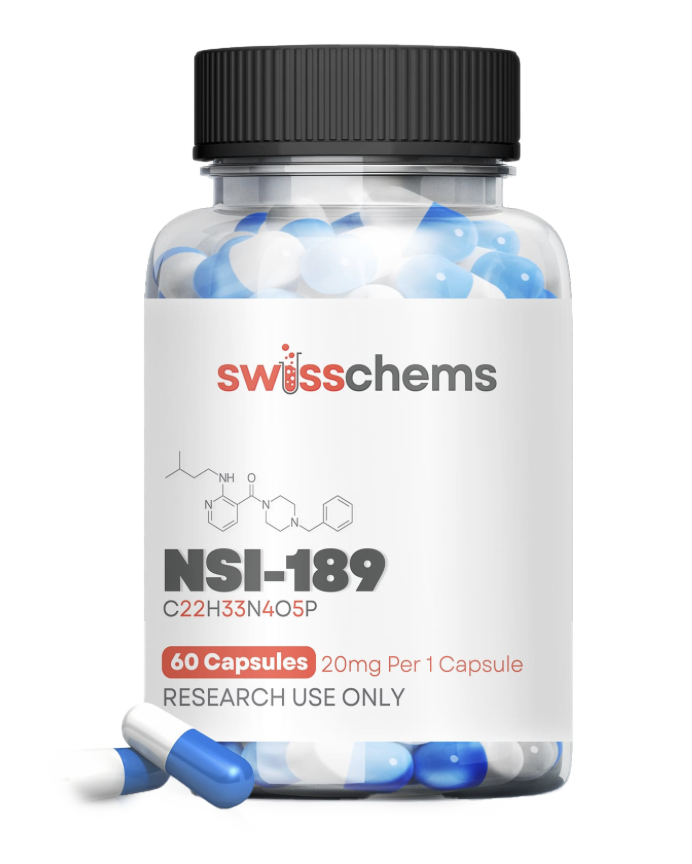
NSI-189 is an experimental small-molecule compound originally developed for the treatment of depression. It is known for its proposed effects on neurogenesis and neuroplasticity, particularly in the hippocampus. NSI-189 has been discussed in research and nootropic communities for potential mood, cognition, and emotional resilience effects. It has not been approved for medical use, and long-term safety and efficacy data in humans are limited.
-
This page summarizes anecdotal reports and community observations, not medical evidence. Reports may be incomplete, biased or inaccurate and are not medical advice or recommendations. “Risk” here refers to how frequently severe or prolonged symptom worsening is reported, not to proven causation or population-wide probability. Individual responses vary widely, and absence of issues in some users does not rule out significant reactions in others.
-
Within PFS/PSSD/PAS communities, NSI-189 is discussed in relation to its potential interactions with neuroplasticity and hippocampal function pathways. NSI-189 (often sold online as NSI-189 phosphate) is an investigational antidepressant candidate that has been studied in humans for major depressive disorder (MDD). It's frequently discussed as a "neurogenic" or pro-neuroplasticity compound because it was discovered via screening approaches tied to hippocampus-related neural stem cell models and was developed around potential procognitive/brain-function effects rather than classic SSRI branding. Mechanistically, published clinical descriptions frame NSI-189 as "independent of serotonin or norepinephrine reuptake inhibition" (i.e., not an SSRI/SNRI-style monoamine reuptake blocker). That said, the exact biological targets and downstream pathways responsible for any benefits remain not fully defined in mainstream sources—so it's safest to describe it as a novel compound with a neurogenic/neuroplasticity-oriented development rationale rather than claiming transporter effects that aren't established. These mechanisms may interact with pathways involving neuroplasticity, hippocampal function, or neural stem cell activity that are often discussed in relation to PFS / PSSD / PAS.
-
Mixed Responses With Occasional Improvement Claims and Non-Trivial Crash Risk (for PFS/PSSD/PAS):
Among individuals with PFS, PSSD, or PAS, NSI-189 is described in community reports as a high-uncertainty intervention with polarized outcomes. A small number of users report significant improvement or even apparent recovery, which is why it continues to surface in discussions, but many report little to no meaningful change. A notable subset describe worsening or destabilization, commonly involving anxiety or agitation, sleep disruption, emotional blunting, or a persistent sense of feeling “off.”
Beyond anecdotal variability, NSI-189 carries additional uncertainty because it is not an approved therapy and was studied in clinical trials for major depressive disorder, not PFS, PSSD, or PAS. Community members frequently emphasize that outcomes are not reliably reproducible, and that any strong CNS-active compound can be destabilizing in a sensitized system. An added practical risk is unregulated “research chemical” sourcing, which introduces concerns about purity, mislabeling, or contamination on top of the drug’s inherent neuroactive effects.
Evidence basis: human clinical trials in major depressive disorder; established pharmacology related to neurogenesis and neuroplasticity; community anecdotes and self-reports. No controlled studies specific to PFS, PSSD, or PAS.
-
Major Improvement
Crash / Baseline Drop
No Effect
Public comments reflect individual experiences and opinions. They are not medical advice and may not be accurate or representative.