L-Glutamine
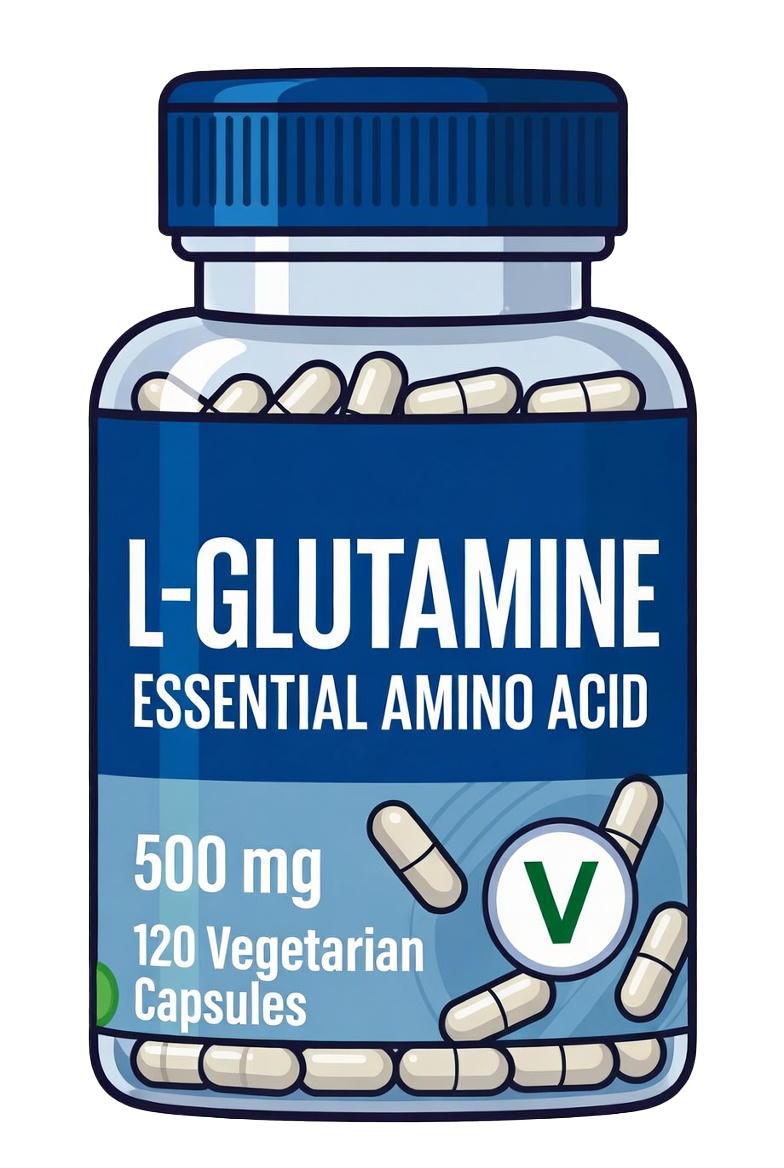
L-glutamine is a common amino acid found in food and made by the body. As a supplement, it’s most often used for gut support (especially during GI stress) and sometimes for exercise recovery. In the intestine, glutamine is a major fuel source for enterocytes (gut lining cells), which is why it’s frequently discussed in the context of maintaining the gut barrier and supporting recovery after irritation or illness.
For PFS/PSSD/PAS communities, L-glutamine comes up because some people suspect gut inflammation, permeability, microbiome shifts, or immune signaling can worsen symptom severity—so “gut-stabilizing” interventions sometimes correlate with small improvements. Anecdotally, glutamine is usually described as low drama: some report minor improvements (digestion, less GI discomfort, slightly better baseline, sometimes small mood/energy lift), many feel no major change, and it’s not described as a cure. It also isn’t commonly flagged for crash-like reactions in these communities, so it’s often treated as a lower-risk thing to try—especially compared with hormone-active or strongly CNS-active substances.
Anecdotes (Community Reports):
https://www.reddit.com/r/PSSD/comments/uakxgl/anyone_else_had_luck_with_glutamine/
https://www.reddit.com/r/PSSD/comments/u1n6jn/has_anyone_had_any_luck_supplementing_lglutamine/
https://www.reddit.com/r/PSSD/comments/w2ftse/supplementing_l_glutamine_for_gut/
How to Interpret This Page
This page summarizes anecdotal reports and community observations, not medical evidence. “Risk” here refers to how frequently severe or prolonged symptom worsening is reported, not to proven causation or population-wide probability. Individual responses vary widely, and absence of issues in some users does not rule out significant reactions in others.
Risk Signal Based on User Reports
Community Reports: Low Crash Signal, Modest/Variable Benefit
Among individuals who already have PFS/PSSD/PAS, L-glutamine is generally described as low risk with modest and inconsistent upside. When people do report benefit, it’s usually framed around gut comfort, stool regularity, reduced “inflammation” feeling, and occasionally a small improvement in energy or mood—often in the context of broader diet/gut changes happening at the same time. Because improvements are usually subtle and the substance is not typically linked to severe worsening, it’s often viewed as a “reasonable, low-stakes” gut-support experiment rather than a meaningful lever for the core syndrome.
Practical note: “Harmless” still isn’t universal—high doses can cause GI upset in some people, and anyone with complex medical issues should run supplements by a clinician—but in community pattern language, glutamine tends to land in the low-risk / minor potential benefit bucket.