L-Carnitine
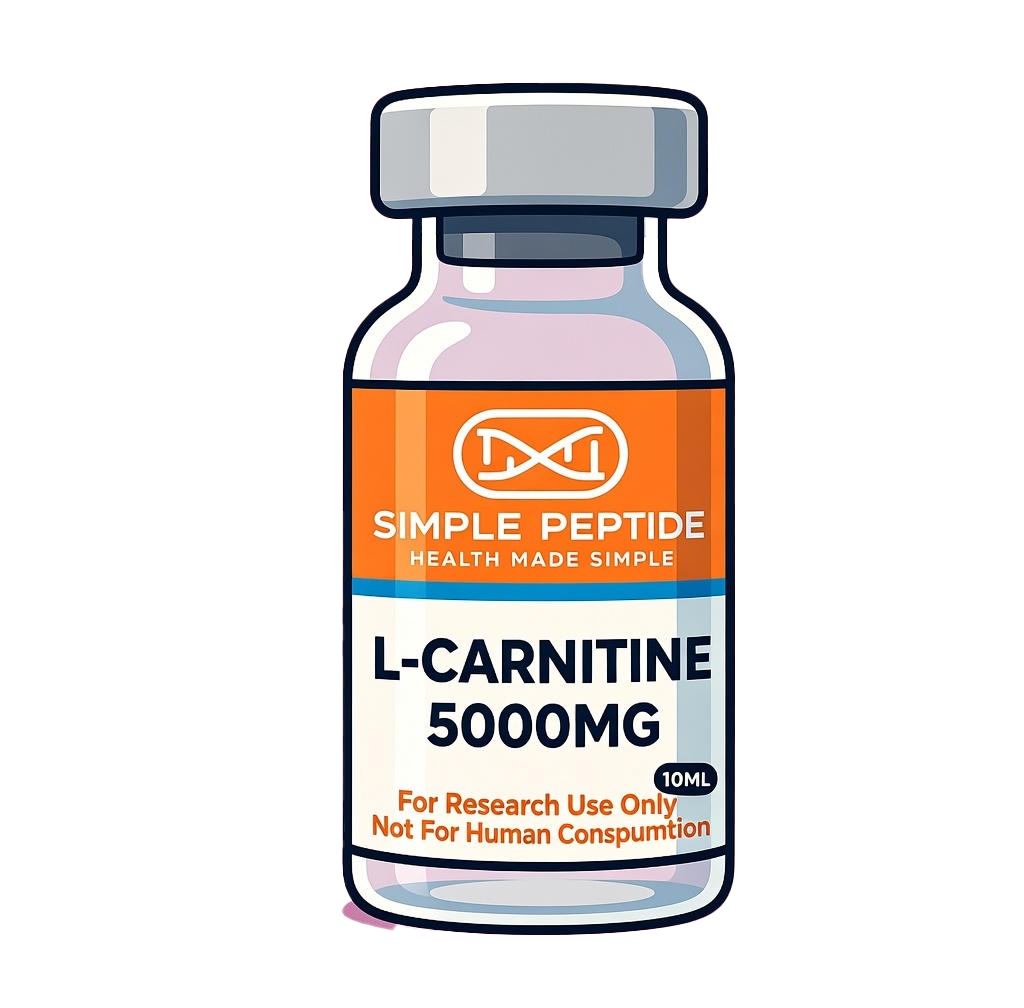
L-carnitine is a naturally occurring compound involved in energy metabolism—its core role is shuttling long-chain fatty acids into mitochondria for fuel. It’s sold over the counter in several forms (e.g., L-carnitine / “free carnitine,” L-carnitine L-tartrate (LCLT), propionyl-L-carnitine), and it also exists as prescription levocarnitine given orally or IV for true deficiency states (for example, in some dialysis-related situations). (Office of Dietary Supplements)
It’s also important to separate L-carnitine from ALCAR (acetyl-L-carnitine). They’re related, but ALCAR has an acetyl group and is often discussed more for “brain/CNS” effects, while L-carnitine/LCLT shows up more in exercise/recovery contexts. They’re not interchangeable in effects or tolerability discussions—so if someone says “carnitine helped/hurt me,” it matters which form they used. (PubMed).
Mechanism notes that overlap with PFS/PSSD/PAS discussion
L-carnitine isn’t a classic “anti-androgen,” but it does intersect with androgen signaling in at least one line of human exercise research. In controlled studies of L-carnitine L-tartrate (LCLT), researchers reported increases in skeletal-muscle androgen receptor (AR) content (in that model, often discussed alongside recovery/muscle damage markers). This doesn’t prove it will “fix” AR issues in PFS/PSSD/PAS—or even that the same effect happens in every tissue—but it’s one reason the compound feels mechanistically “relevant” to some people exploring AR-centered theories. (PubMed)
Injectable vs supplement: prescription/medical levocarnitine IV/oral is generally used for deficiency and is clinician-supervised. “L-carnitine injections” marketed for fat loss/performance are a different ecosystem (variable sourcing, dosing, and oversight). From a risk-communication standpoint, it’s reasonable to treat injection use as higher-stakes than a standard oral supplement because sterility/quality and dosing errors add extra failure modes—even if the molecule is the same.
Crash Anecdotes (Community Reports):
https://www.reddit.com/r/PSSD/comments/17zuulx/lcarnitine_caused_me_to_have_the_worst_crash_in/
https://www.reddit.com/r/PSSD/comments/1oue81b/im_having_a_big_big_window/
https://www.reddit.com/r/PSSD/comments/13g068x/l_carnitine/
How to Interpret This Page
This page summarizes anecdotal reports and community observations, not medical evidence. “Risk” here refers to how frequently severe or prolonged symptom worsening is reported, not to proven causation or population-wide probability. Individual responses vary widely, and absence of issues in some users does not rule out significant reactions in others.
Risk Signal Based on User Reports
Community Reports: Mixed Outcomes & Variable Risk Signal
In PFS/PSSD/PAS discussions, L-carnitine is usually described as “variable.” Some people report small benefits(often framed around energy, exercise tolerance, mood resilience, or sexual function), while others report flares/crashes(commonly described as increased anxiety/insomnia, emotional blunting/anhedonia shifts, fatigue/“wired” feelings, or sexual symptom worsening). The fact that there’s at least some published discussion of AR-related effects (in an exercise model, with LCLT) makes the mechanism feel plausible to some—but community outcomes don’t read like a consistent “needle mover,” and it’s not generally framed as a cure. (PubMed)
Practical risk cues (non-authoritative): people who are highly crash-prone, currently unstable, or mid-recovery attempt often choose to avoid “stacking variables” here—especially injectables, high doses, or unclear formulations—because the upside is usually described as modest while the downside (for a subset) can be meaningful. If someone does trial it, many communities emphasize “one change at a time” so any reaction is attributable.
Evidence basis: General supplement/clinical background on carnitine and levocarnitine (Office of Dietary Supplements); limited human exercise literature suggesting AR-content changes with LCLT (PubMed); anecdotal reports (forums/self-reports). No controlled studies evaluating PFS/PSSD/PAS outcomes specifically.