Lithium
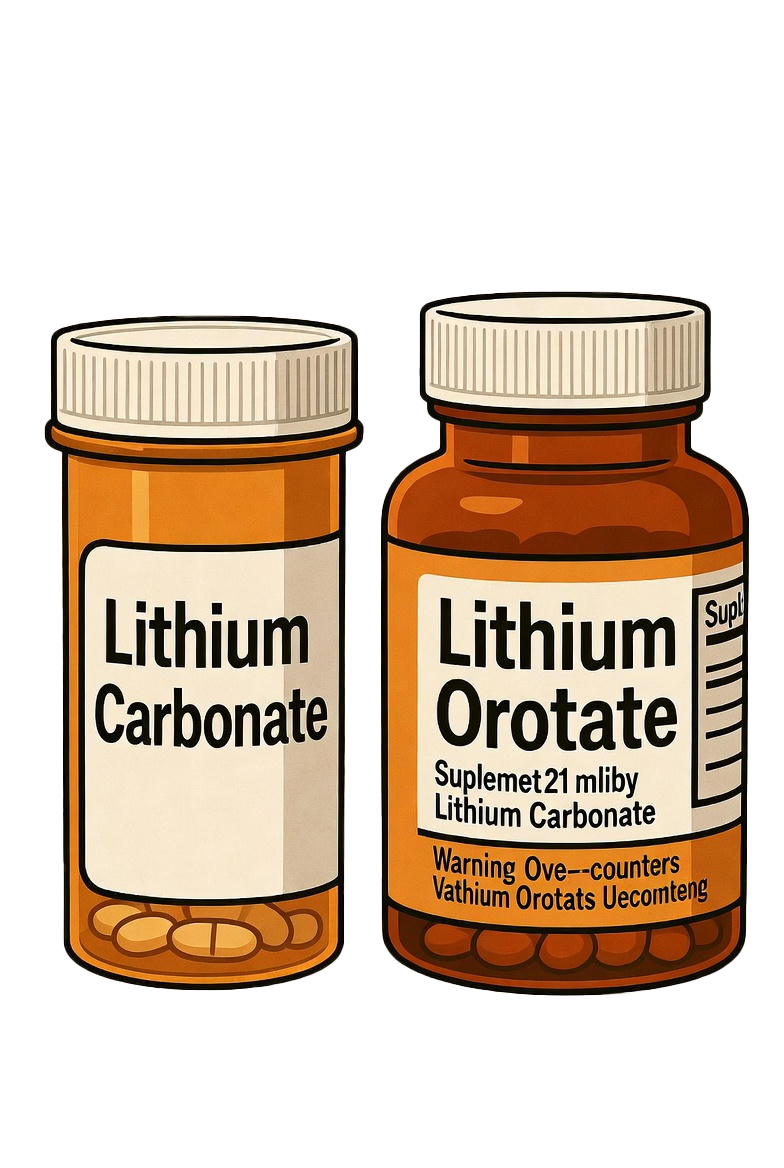
Lithium is a naturally occurring element found in trace amounts in water and some foods, and it’s also a prescription medication used in much higher doses—most commonly for bipolar disorder and mood stabilization. Prescription lithium is usually given as lithium carbonate (or citrate), requires blood-level monitoring, and has a narrow therapeutic window. Because it can meaningfully affect the brain and multiple organ systems, it’s not a typical “supplement”—it functions more like a high-impact medication when used at clinical doses.
In PFS/PSSD/PAS communities, lithium sometimes appears in recovery anecdotes or “protocol” discussions, usually framed around its effects on cell signaling and neuroplasticity rather than hormones directly. Mechanistically, lithium inhibits GSK3β, which can increase β-catenin/Wnt signaling and influence downstream inflammatory and stress pathways (including intersections with NF-κB and MAPK signaling in certain models). The theory some people extrapolate is that if parts of PFS/PSSD/PAS involve durable changes in gene expression, inflammatory signaling, or “stuck” regulatory states, lithium’s broad signaling effects might—in some individuals—nudge systems toward a more resilient baseline.
Anecdotes (Community Reports):
https://www.pssdforum.org/viewtopic.php?t=5687&hilit=lithium
https://www.pssdforum.org/viewtopic.php?t=5684&hilit=lithium
https://www.pssdforum.org/viewtopic.php?t=3763&hilit=fbz
https://www.pssdforum.org/viewtopic.php?t=2262&hilit=cured
https://www.reddit.com/r/PSSD/comments/1da4oty/anyone_have_improvements_from_lithium/
https://www.reddit.com/r/AccutaneRecovery/comments/1dnsl6a/lithium_works/
https://www.reddit.com/r/FinasterideSyndrome/comments/1f2ixgh/any_bad_experiences_on_lithium/
https://www.reddit.com/r/PSSD/comments/1kl5n17/why_is_there_such_a_limited_amount_of_experiences/
How to Interpret This Page
This page summarizes community anecdotes and informal observations, not medical evidence. “Improvement” here means a person reported feeling better after trying a substance; it does not prove the substance caused the change or that it will apply to others. Outcomes can be influenced by many factors (time, stopping another trigger, dose changes, other interventions, sleep/diet), and reporting bias is common. Some substances mentioned in improvement stories are also linked to flares or worsening in other reports. Use this as a starting point for research and discussion with a licensed clinician—not as medical advice.
Community Reports: Mixed Outcomes & Variable Risk Signal
Within PFS/PSSD/PAS communities, lithium appears in a small but recurring set of anecdotes describing partial improvement—most commonly in mood stability, stress tolerance, cognition, or emotional range. More rarely, individuals describe very large improvement or even “recovery” claims. At the same time, many people report no meaningful change, and a subset report worsening, often framed as fatigue, emotional flattening, sleep disruption, or a general sense of feeling destabilized.
Overall, the pattern reflects high variability rather than a consistent effect. Reports frequently involve multiple simultaneous changes (time passing, stopping another trigger, dose adjustments, other medications or supplements, diet/sleep changes), making it impossible to determine whether lithium itself drove the outcome. As with many substances discussed in this context, lithium’s appearance alongside improvement should be interpreted as a signal that some people experimented with it and experienced divergent responses, not as evidence of efficacy.
A commonly discussed hypothesis is that lithium’s broad intracellular signaling effects—often framed around GSK3β inhibition and downstream pathway modulation—could intersect with biological systems implicated in these syndromes. However, this remains speculative and has not been validated in PFS/PSSD/PAS-specific studies.
Lithium is also not a low-impact intervention. At prescription doses it carries well-documented risks, including tremor, fatigue, cognitive dulling, gastrointestinal effects, increased thirst and urination, and potential impacts on thyroid and kidney function. It has a narrow safety margin and clinically important interaction risks (for example with dehydration, NSAIDs, ACE inhibitors/ARBs, and some diuretics). Because of these factors, outcomes can be destabilizing in some sensitized individuals even when others report benefit.
For these reasons, lithium is widely treated in the community as a high-complexity, clinician-supervised option, rather than a casual supplement or low-risk experiment. Even among those who view it as potentially helpful, many emphasize that any trial should be approached cautiously and only where the expected benefit justifies the monitoring and risk involved.
Evidence Basis
Established pharmacology and clinical safety literature on lithium; mechanistic signaling research involving GSK3β/β-catenin and related pathways; anecdotal community reports (online forums, self-reports).
No controlled studies demonstrate benefit or safety for lithium specifically in PFS/PSSD/PAS.
*informational — not medical advice.
Summarizes community reports; not a recommendation to try or avoid