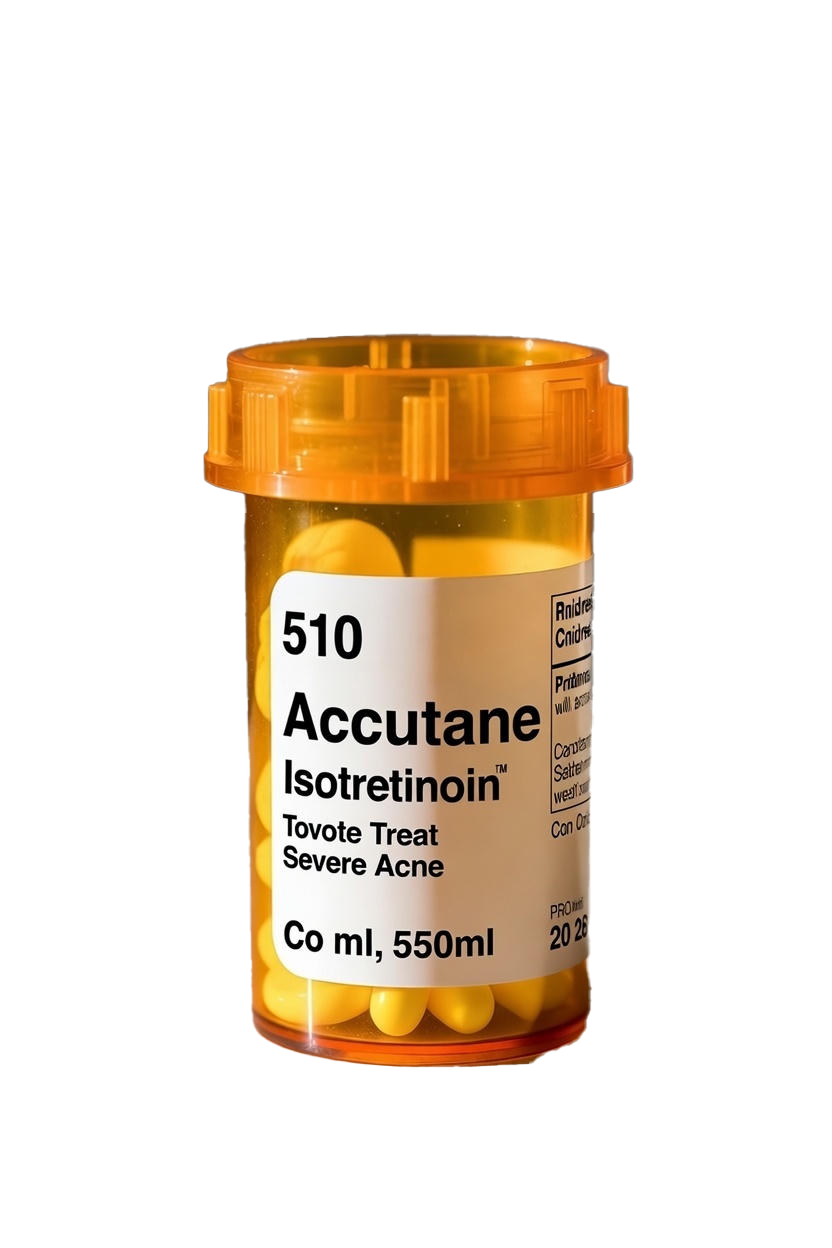
Accutane
Accutane (generic isotretinoin) is a potent oral retinoid prescribed for severe, treatment-resistant acne. It works through multiple mechanisms, including shrinking sebaceous glands and reducing sebum production, normalizing keratinization within hair follicles, and reducing inflammation. Because of its broad biologic effects, isotretinoin is tightly regulated and typically reserved for cases where other treatments have failed.
In community discussions, the term “post-Accutane syndrome” (sometimes also discussed as post-retinoid sexual dysfunction) is used to describe symptoms that some individuals report persisting after discontinuation. Reported symptoms often include sexual dysfunction and neuropsychiatric complaints. Regulatory agencies and safety reviews have acknowledged concerns about psychiatric and sexual side effects during isotretinoin treatment, and safety communications have discussed reports of sexual dysfunction events that may persist after stopping the drug. In broader discussions of enduring sexual dysfunction syndromes, isotretinoin is sometimes mentioned alongside SSRIs (PSSD) and finasteride (PFS) due to symptom overlap, though mechanisms remain uncertain and definitive causation has not been established.
Crash Anecdotes (Community Reports):
How to Interpret This Page
This page summarizes anecdotal reports and community observations, not medical evidence. “Risk” here refers to how frequently severe or prolonged symptom worsening is reported, not to proven causation or population-wide probability. Individual responses vary widely, and absence of issues in some users does not rule out significant reactions in others.
Risk Signal Based on User Reports
Reports of Severe and Sometimes Lasting Worsening (for PFS/PSSD/PAS):
Among individuals who already have PFS/PSSD/PAS, isotretinoin is frequently discussed in community reports as preceding symptom flares or worsening, sometimes described as prolonged. Concerns focus on overlap with sexual and neuropsychiatric symptoms already present in these conditions. Because reported outcomes appear variable and, in some cases, severe, many in these communities consider avoidance a more conservative approach.
For individuals without these conditions, isotretinoin is an effective and widely used treatment for severe acne, but there are still reports of persistent sexual or neuropsychiatric side effects in a subset of users. Given the uncertainty around mechanisms, the intensity of the drug’s systemic effects, and the potential severity described in some anecdotes, some people judge the risk to outweigh the benefits unless the indication is strong.
Evidence basis: Anecdotal reports (online forums, self-reports); regulatory safety communications and reviews; no controlled studies examining PFS/PSSD/PAS-specific outcomes.