Wellbutrin / Bupropion
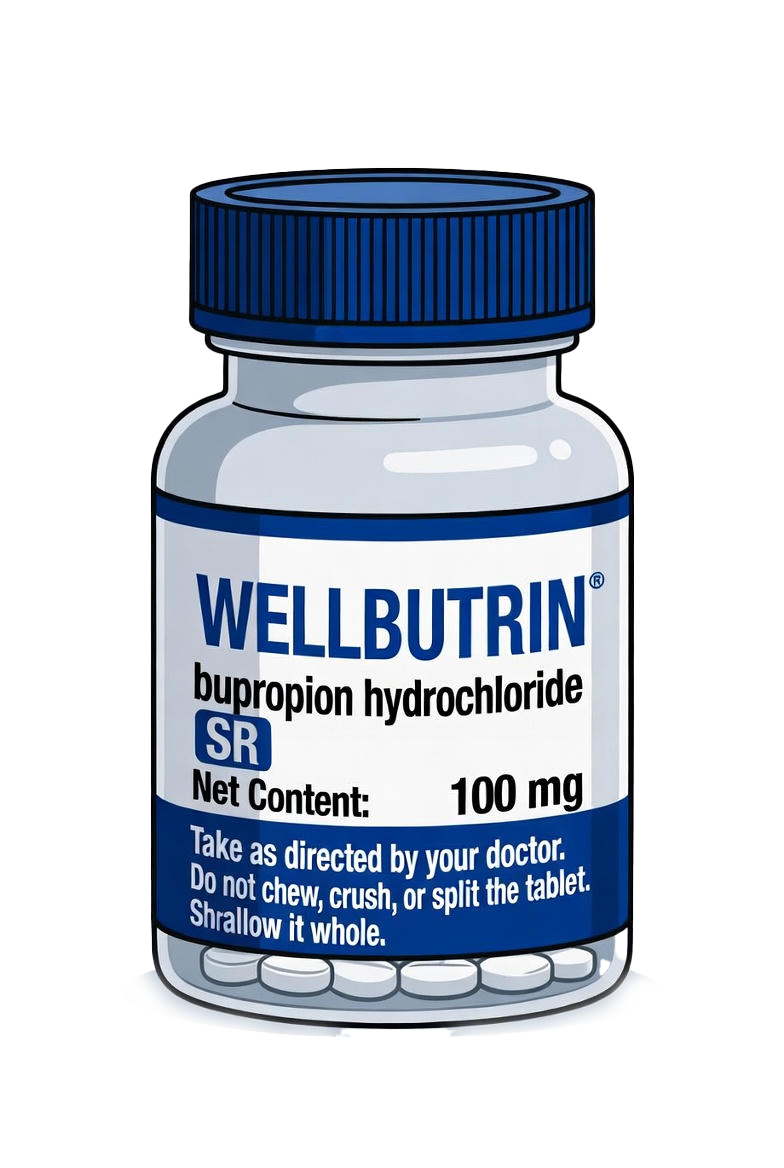
Wellbutrin (generic bupropion) is an antidepressant typically classified as an NDRI (norepinephrine–dopamine reuptake inhibitor) and also has nicotinic acetylcholine receptor–blocking activity. Unlike SSRIs/SNRIs, it is generally described as having minimal direct serotonergic activity. Clinically, it is often considered one of the antidepressants with lower rates of treatment-emergent sexual dysfunction compared with SSRIs, and it is sometimes chosen specifically for that reason.
Even so, bupropion can significantly shift arousal and stress-related neurochemistry through dopamine/norepinephrine effects. Official labeling highlights activating adverse effects such as anxiety, agitation, insomnia, irritability, and it includes risks such as increased blood pressure and dose-related seizure risk in susceptible situations. In PFS/PSSD/PAS discussions, bupropion is often described as high-variance: some people report improved energy or sexual function, while others report destabilization (worsened anxiety/sleep, emotional changes, or worsening sexual symptoms), particularly when starting, increasing dose, or reinstating after a break.
(1) https://pmc.ncbi.nlm.nih.gov/articles/PMC514842/
(2) https://www.accessdata.fda.gov/drugsatfda_docs/label/2025/020358s070lbl.pdf
Crash Anecdotes (Community Reports):
https://www.reddit.com/r/PSSD/comments/jibhff/be_cautious_with_wellbutrinbupropion/
How to Interpret This Page
This page summarizes anecdotal reports and community observations, not medical evidence. “Risk” here refers to how frequently severe or prolonged symptom worsening is reported, not to proven causation or population-wide probability. Individual responses vary widely, and absence of issues in some users does not rule out significant reactions in others.
Risk Signal Based on User Reports
Reports of Severe and Sometimes Lasting Worsening (for PFS/PSSD/PAS):
Among individuals who already have PFS/PSSD/PAS, bupropion is frequently discussed in community reports as a potential destabilizer for some users, sometimes described as prolonged. Reports commonly focus on activating effects (anxiety, agitation, insomnia) and on sexual or emotional symptom changes—both improvements and worsening are described, suggesting outcomes can be unpredictable. Because reactions appear highly individual and can be severe for a subset of users, many in these communities consider avoidance or extreme caution a more conservative approach, especially during unstable periods.
For individuals without these conditions, bupropion is widely prescribed and beneficial for many, and it is often associated with fewer sexual side effects than SSRIs. However, there are still reports of significant activation and mood/anxiety side effects in a subset of users. Community discussions also note that reinstatement is sometimes reported to temporarily improve symptoms for some people, but others describe marked worsening after re-exposure. Given this variability and uncertainty, many view reinstatement as a high-uncertainty strategy that warrants careful medical oversight.
Evidence basis: Clinical/review literature on sexual side effects; FDA labeling and safety information; anecdotal reports (online forums, self-reports); no controlled studies examining PFS/PSSD/PAS-specific outcomes.