Ketoconazole Shampoo
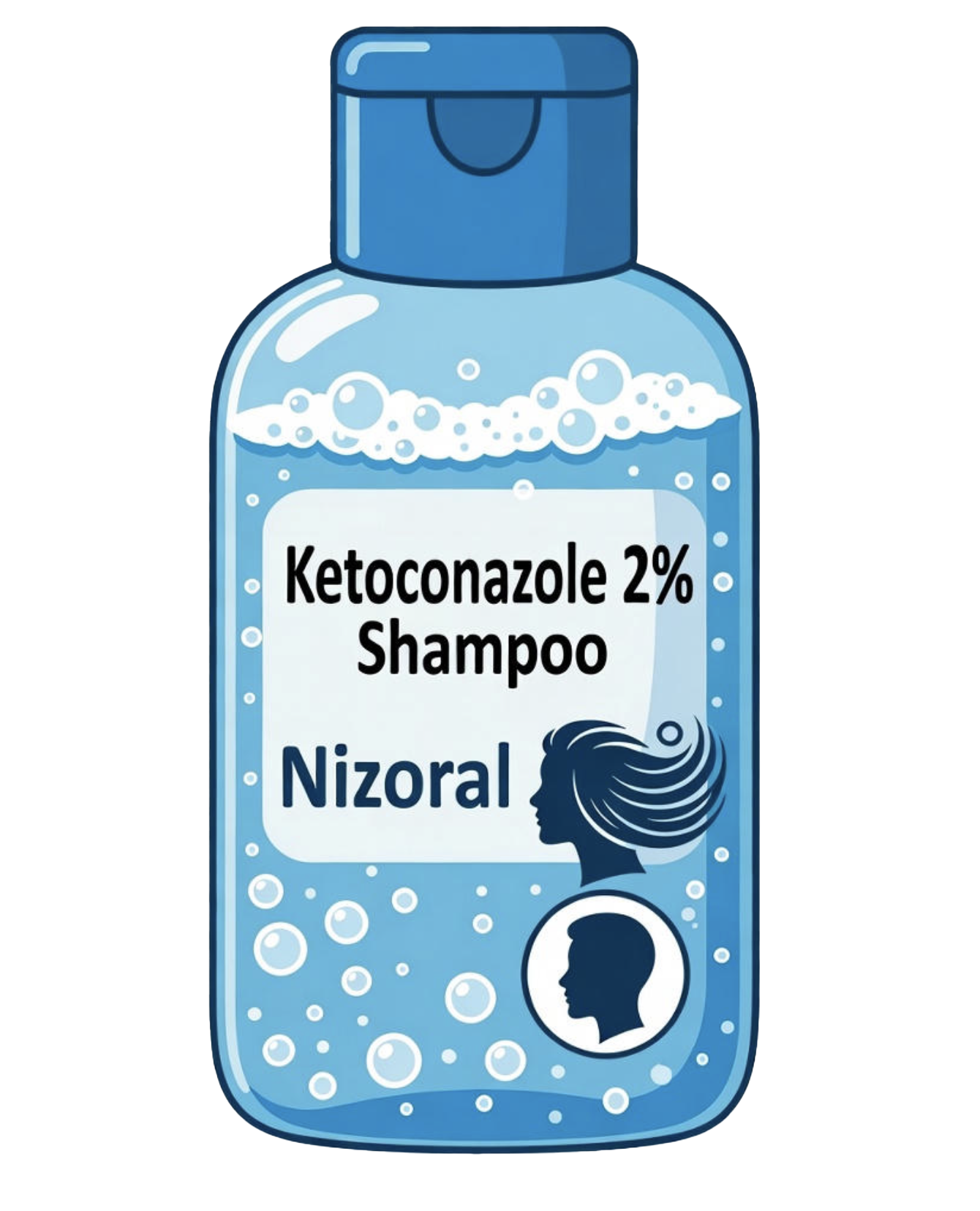
Ketoconazole shampoo (commonly 1% OTC or 2% prescription, often sold as Nizoral) is an antifungal shampoo used for dandruff and seborrheic dermatitis. Some people also use it off-label for hair shedding or scalp irritation because reducing inflammation and fungal/yeast overgrowth can improve scalp comfort and, in some cases, hair quality. It is typically used topically a few times per week, and products differ by concentration and contact time on the scalp.
Within PFS/PSSD/PAS communities, ketoconazole shampoo is often approached with caution because ketoconazole has reported anti-androgen–related activity in some contexts and there are community anecdotes describing symptom flares after use. While the evidence is largely anecdotal and there are no clinical studies demonstrating that ketoconazole shampoo causes PFS, some individuals report a “crash” pattern (worsened sexual, mood, cognitive, or energy symptoms) after starting or re-starting it. Practical risk cues often discussed include higher concentration (2% vs 1%), frequent use, longer scalp contact time, and concurrent use of other hormone-active hair-loss products; people who are already unstable or crash-prone often choose avoidance as a conservative approach.
Crash Anecdotes (Community Reports):
https://www.reddit.com/r/FinasterideSyndrome/comments/1eu1we5/has_anyone_crashed_on_ketoconazel/
How to Interpret This Page
This page summarizes anecdotal reports and community observations, not medical evidence. “Risk” here refers to how frequently severe or prolonged symptom worsening is reported, not to proven causation or population-wide probability. Individual responses vary widely, and absence of issues in some users does not rule out significant reactions in others.
Risk Signal Based on User Reports
Reports of Severe and Sometimes Lasting Worsening (for PFS/PSSD/PAS):
Among individuals who already have PFS/PSSD/PAS, ketoconazole shampoo is commonly mentioned in community reports as preceding symptom worsening, sometimes described as prolonged. Although topical use is often assumed to be “local,” some users report systemic-style effects (sexual, mood, cognitive, and fatigue-related changes). Because outcomes appear highly variable and the downside described in some reports can be significant, many in the community consider avoidance a more conservative choice—especially during periods of instability or recovery attempts.
For individuals without these conditions, ketoconazole shampoo is widely used for dandruff and seborrheic dermatitis and is tolerated by many. However, there are still reports of adverse reactions in a subset of users. Given the uncertainty and the potential severity described in some anecdotes, some people choose to avoid using ketoconazole specifically for hair-loss purposes unless there is a clear medical need.
Evidence basis: Anecdotal reports (online forums, self-reports); known pharmacology of ketoconazole in other contexts; no controlled studies examining PFS/PSSD/PAS outcomes from topical ketoconazole shampoo.