Lithium
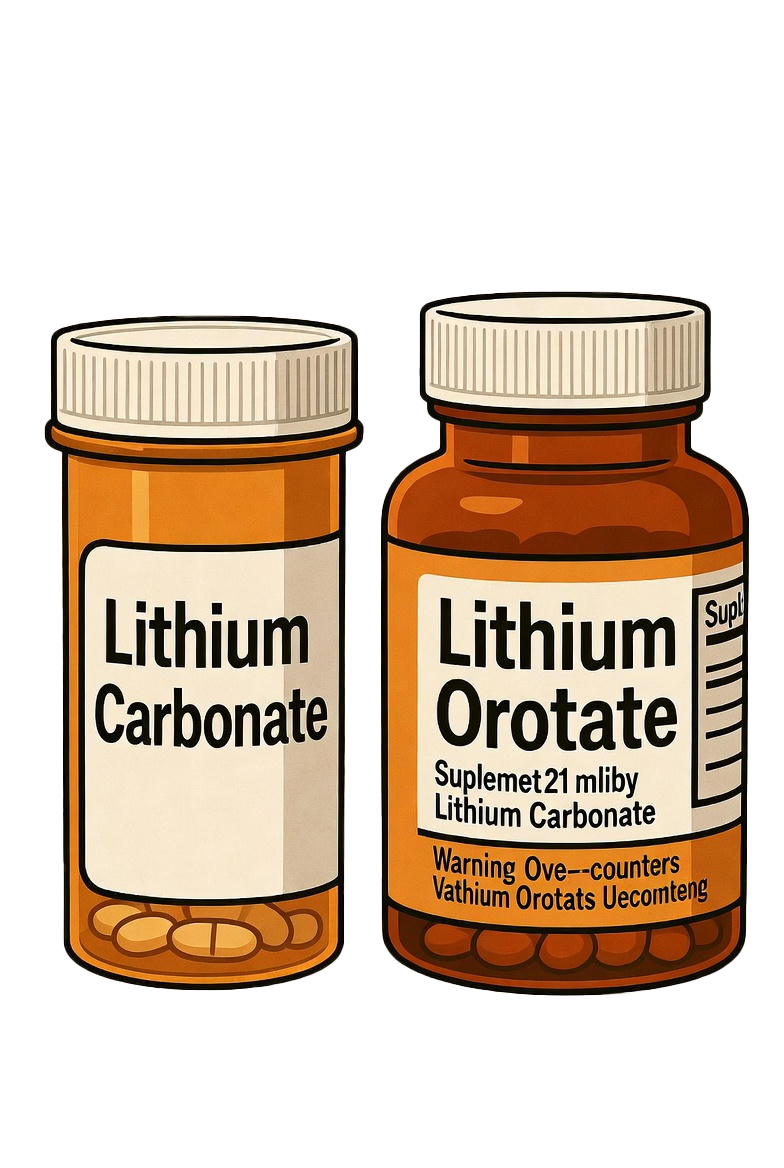
Lithium is a naturally occurring element found in trace amounts in water and some foods, and it’s also a prescription medication used in much higher doses—most commonly for bipolar disorder and mood stabilization. Prescription lithium is usually given as lithium carbonate (or citrate), requires blood-level monitoring, and has a narrow therapeutic window. Because it can meaningfully affect the brain and multiple organ systems, it’s not a typical “supplement”—it functions more like a high-impact medication when used at clinical doses.
-
This page summarizes anecdotal reports and community observations, not medical evidence. Reports may be incomplete, biased or inaccurate and are not medical advice or recommendations. “Risk” here refers to how frequently severe or prolonged symptom worsening is reported, not to proven causation or population-wide probability. Individual responses vary widely, and absence of issues in some users does not rule out significant reactions in others.
-
Within PFS/PSSD/PAS communities, lithium is discussed in relation to its potential interactions with cell signaling and neuroplasticity pathways. Mechanistically, lithium inhibits GSK3β, which can increase β-catenin/Wnt signaling and influence downstream inflammatory and stress pathways (including intersections with NF-κB and MAPK signaling in certain models). The theory some people extrapolate is that if parts of PFS/PSSD/PAS involve durable changes in gene expression, inflammatory signaling, or "stuck" regulatory states, lithium's broad signaling effects might interact with these pathways. These mechanisms may interact with pathways involving gene expression, inflammatory signaling, or cellular stress response that are often discussed in relation to PFS / PSSD / PAS.
-
Mixed Responses With Occasional Improvement Claims and Significant Psychiatric Risk (for PFS/PSSD/PAS):
Among individuals with PFS, PSSD, or PAS, lithium appears in a small but recurring set of community reports describing partial improvement, most often involving mood stability, stress tolerance, cognition, or emotional range. More rarely, individuals describe very large improvements or apparent recovery, which is why lithium continues to be discussed. However, many people report no meaningful benefit, and a notable subset describe worsening or destabilization, including fatigue, emotional flattening, sleep disruption, cognitive dulling, or a general sense of feeling “off” or regressed.
Overall, community experience reflects high variability rather than a reliable therapeutic effect, and improvement stories are frequently confounded by simultaneous changes such as time, stopping other triggers, dose adjustments, or additional medications or supplements. While lithium’s broad intracellular signaling effects are sometimes cited as a theoretical rationale, this remains speculative and unvalidated in PFS, PSSD, or PAS-specific contexts.
Importantly, lithium is not a low-impact intervention and has caused crashes or sustained worsening in some individuals, similar to other psychiatric medications discussed in these communities. It carries a narrow safety margin and well-documented risks affecting renal, thyroid, and neurological function, along with clinically significant interaction risks. As a result, lithium is generally viewed as a high-complexity, clinician-supervised option with non-trivial downside risk, rather than a dependable or broadly applicable lever for recovery.
Evidence basis: established pharmacology and clinical safety literature on lithium; mechanistic signaling research; community anecdotes and self-reports. No controlled studies demonstrate benefit or safety for lithium in PFS, PSSD, or PAS.
-
“Cure/Recovery” Anecdotes
Crash /Baseline Drop (Reported)
Sustained Improvement
Public comments reflect individual experiences and opinions. They are not medical advice and may not be accurate or representative.