Hydroxyzine
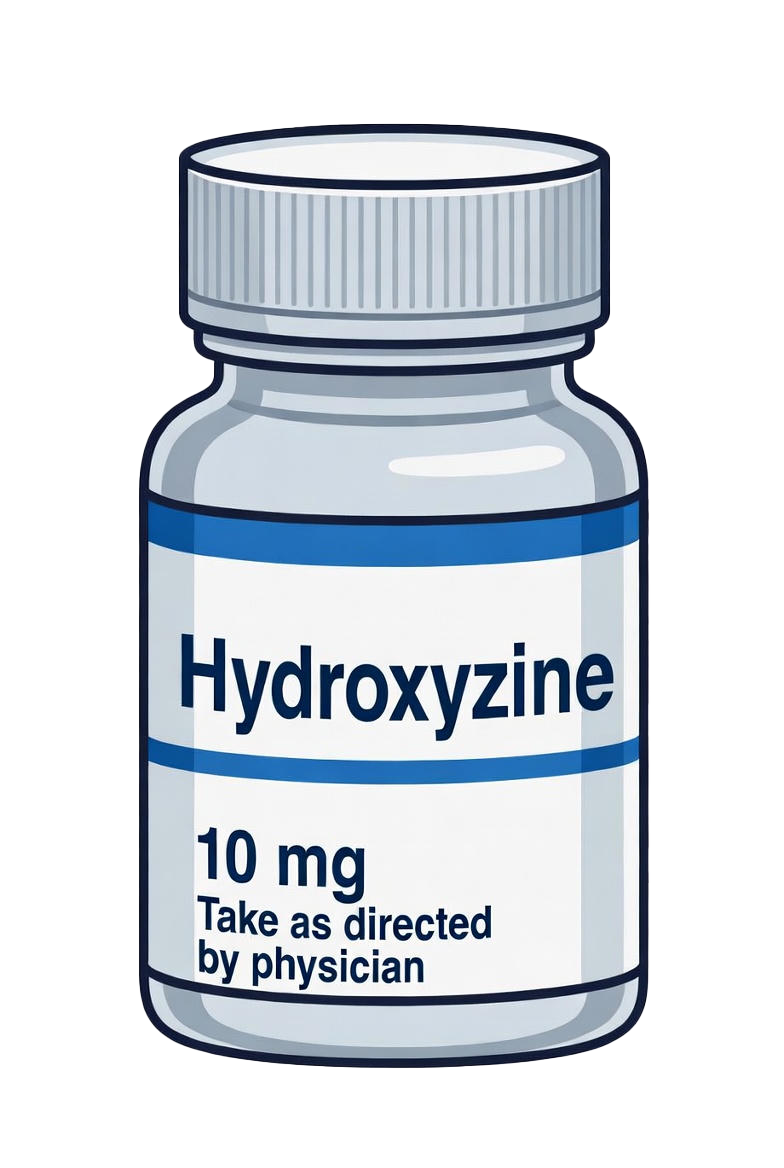
Hydroxyzine (commonly sold as Atarax or Vistaril) is a first-generation antihistamine used for allergic itching, dermatologic conditions, and as a sedating/anxiolytic medication. It readily crosses the blood–brain barrier and can cause noticeable drowsiness, and it may potentiate other central nervous system depressants.
-
This page summarizes anecdotal reports and community observations, not medical evidence. Reports may be incomplete, biased or inaccurate and are not medical advice or recommendations. “Risk” here refers to how frequently severe or prolonged symptom worsening is reported, not to proven causation or population-wide probability. Individual responses vary widely, and absence of issues in some users does not rule out significant reactions in others.
-
Within PFS/PSSD/PAS communities, hydroxyzine is discussed in relation to its potential interactions with histamine and serotonin receptor signaling pathways. Mechanistically, hydroxyzine primarily acts as an H1 histamine receptor inverse agonist, which accounts for its anti-itch and sedating effects. It is not an SSRI and does not raise serotonin by blocking reuptake; however, pharmacology references describe additional off-target CNS effects, including antagonism at certain serotonin receptors (often discussed in relation to 5-HT2A) and broader effects on arousal, sleep architecture, and autonomic tone. These mechanisms may interact with pathways involving histamine signaling, serotonin receptor activity, or CNS arousal that are often discussed in relation to PFS / PSSD / PAS.
-
Reports of Symptom Worsening in Some Users (for PFS/PSSD/PAS):
Among individuals who already have PFS/PSSD/PAS, hydroxyzine is occasionally mentioned in community reports as preceding symptom flares, sometimes described as involving mood changes, emotional blunting, fatigue, sexual symptoms, or a general sense of destabilization. Outcomes appear variable, with some people tolerating it without issue and others reporting worsening. Because hydroxyzine is centrally active and sedating, some in the community approach it cautiously or avoid it during periods of instability or recovery attempts.
For individuals without these conditions, hydroxyzine is widely prescribed and tolerated by many, particularly for short-term or situational use. However, there are still reports of adverse CNS effects in a subset of users.
Evidence basis: Anecdotal reports (online forums, self-reports); established pharmacology of hydroxyzine; no controlled studies examining PFS/PSSD/PAS outcomes.
-
Public comments reflect individual experiences and opinions. They are not medical advice and may not be accurate or representative.