Gabapentin
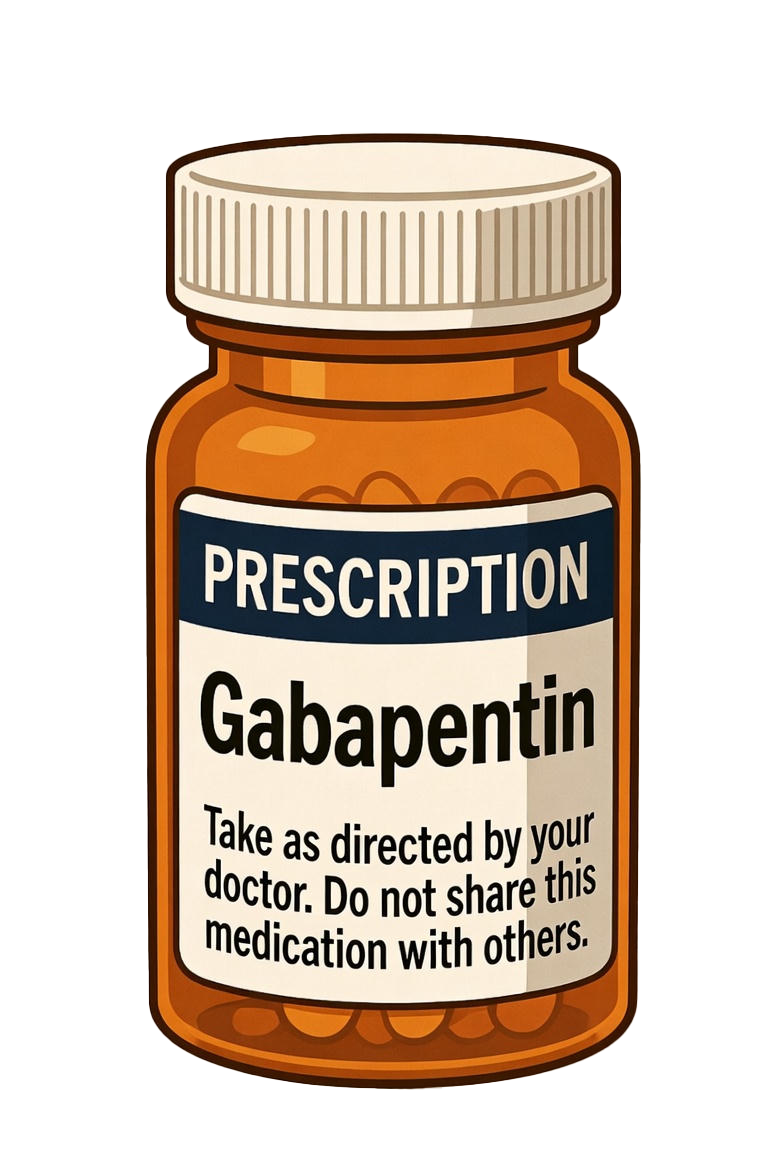
Gabapentin is a prescription medication commonly used to treat nerve pain, seizures, and certain anxiety-related conditions. It works by modulating calcium channels in the nervous system, which can reduce excitatory signaling. Gabapentin is also sometimes prescribed off-label for sleep or anxiety, with effects varying between individuals.
-
This page summarizes anecdotal reports and community observations, not medical evidence. Reports may be incomplete, biased or inaccurate and are not medical advice or recommendations. “Risk” here refers to how frequently severe or prolonged symptom worsening is reported, not to proven causation or population-wide probability. Individual responses vary widely, and absence of issues in some users does not rule out significant reactions in others.
-
Within PFS/PSSD/PAS communities, gabapentin is discussed in relation to its potential interactions with voltage-gated calcium channels and excitatory neurotransmitter pathways. Although it was designed as a GABA analog, it does not act like GABA directly; its main mechanism is binding the α2δ subunit of voltage-gated calcium channels, which reduces release of excitatory neurotransmitters and can calm overactive nerve signaling. These mechanisms may interact with pathways involving excitatory/inhibitory balance or neurosteroid/GABA signaling that are often discussed in relation to PFS / PSSD / PAS. (pmc) (fda)
-
Reports of Mostly Symptom-Management Use, With Occasional Flares (for PFS/PSSD/PAS):
Among individuals who already have PFS/PSSD/PAS, gabapentin is more commonly discussed as a symptom band-aid(sleep/anxiety/pain) than as a trigger of permanent baseline worsening. That said, some community reports describe flares or destabilization—often involving heavy sedation, cognitive dulling/brain fog, emotional flattening, worsened fatigue, or rebound symptoms during tapering or after stopping. Because responses appear highly individual and dose-dependent, many treat gabapentin as a lower-to-moderate risk option that still deserves careful handling.
For individuals without these conditions, gabapentin is widely prescribed and often tolerated, but sedation, dizziness, cognitive slowing, and dependence/tolerance-like issues can occur in a subset, and risk increases when combined with other sedatives.
Evidence basis: Established pharmacology and FDA labeling (including respiratory depression warnings); anecdotal reports (online forums, self-reports); no controlled studies examining PFS/PSSD/PAS-specific outcomes.
-
Flare (Reported, Often Reversible)
Public comments reflect individual experiences and opinions. They are not medical advice and may not be accurate or representative.