Cold Exposure
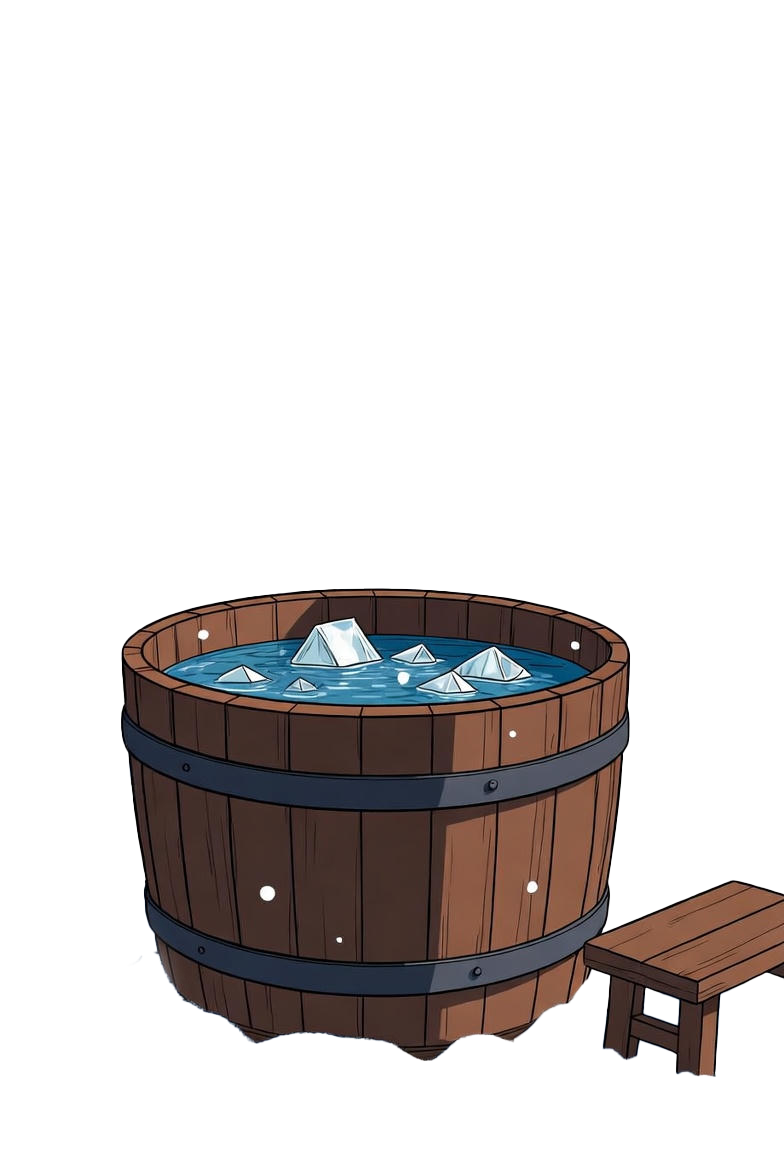
Cold plunging involves brief immersion in cold water and is commonly used for recovery, circulation, and mental resilience. It triggers a stress response that can increase alertness and temporarily elevate adrenaline and endorphins. Some people use cold plunges to support muscle recovery or mood regulation. Individual responses vary, and excessive or poorly timed cold exposure can be physically demanding for some individuals.
-
This page summarizes anecdotal reports and community observations, not medical evidence. Reports may be incomplete, biased or inaccurate and are not medical advice or recommendations. “Risk” here refers to how frequently severe or prolonged symptom worsening is reported, not to proven causation or population-wide probability. Individual responses vary widely, and absence of issues in some users does not rule out significant reactions in others.
-
Within PFS/PSSD/PAS communities, cold exposure is discussed in relation to its potential interactions with autonomic nervous system and stress-response pathways. Cold exposure (cold showers, ice baths, plunging) is a stressor that can produce a strong but brief shift in physiology: increased sympathetic activation (adrenaline/noradrenaline), peripheral vasoconstriction followed by rebound vasodilation, and changes in inflammatory signaling over time. Mechanistically, it can plausibly affect autonomic balance and stress-response calibration—two systems that often feel dysregulated in PFS/PSSD/PAS (wired-but-tired, poor stress tolerance, sleep fragmentation, blunted reward, etc.). Some also speculate about overlap with neurosteroid/GABA dynamics indirectly, in the sense that repeated controlled stress exposures can sometimes improve stress reactivity and sleep architecture in certain people, though that's a broad and non-specific pathway. These mechanisms may interact with pathways involving autonomic tone, stress response, or inflammatory signaling that are often discussed in relation to PFS / PSSD / PAS.
-
In community anecdotes, cold plunging tends to show up as a minor-supportive tool rather than a reliable lever. A subset of people report small improvements—clearer head, slightly improved mood, reduced anxiety, better sleep depth, or a brief “return of feeling”/motivation after a plunge—while many feel nothing beyond the acute jolt. Others feel worse, especially if they’re already in a crash/PEM-like state: cold exposure can be too intense of a stressor and can worsen fatigue, dysautonomia symptoms, or trigger an adrenaline “hangover” that disrupts sleep. That variability fits the idea that this is primarily an autonomic/stress-response intervention: it may help people whose systems can adapt to controlled stress, but it can backfire in people who are already overtaxed.
Evidence Basis
Anecdotal community reports (online forums, self-reports). No controlled studies demonstrating safety or benefit for PFS/PSSD/PAS specifically.
-
Public comments reflect individual experiences and opinions. They are not medical advice and may not be accurate or representative.