High Risk Antibiotics
Fluoroquinolones are a class of broad-spectrum antibiotics used to treat serious bacterial infections such as pneumonia, urinary tract infections, and gastrointestinal infections; common examples include ciprofloxacin, levofloxacin, moxifloxacin, and norfloxacin. They work by inhibiting bacterial DNA replication and are typically reserved for specific cases due to potential side effects.
Doxycycline is a tetracycline antibiotic used to treat acne, respiratory infections, Lyme disease, and certain sexually transmitted infections; examples in the same class include doxycycline and minocycline. It works by inhibiting bacterial protein synthesis and is also used for malaria prevention and inflammatory skin conditions
-
This page summarizes anecdotal reports and community observations, not medical evidence. Reports may be incomplete, biased or inaccurate and are not medical advice or recommendations. “Risk” here refers to how frequently severe or prolonged symptom worsening is reported, not to proven causation or population-wide probability. Individual responses vary widely, and absence of issues in some users does not rule out significant reactions in others.
-
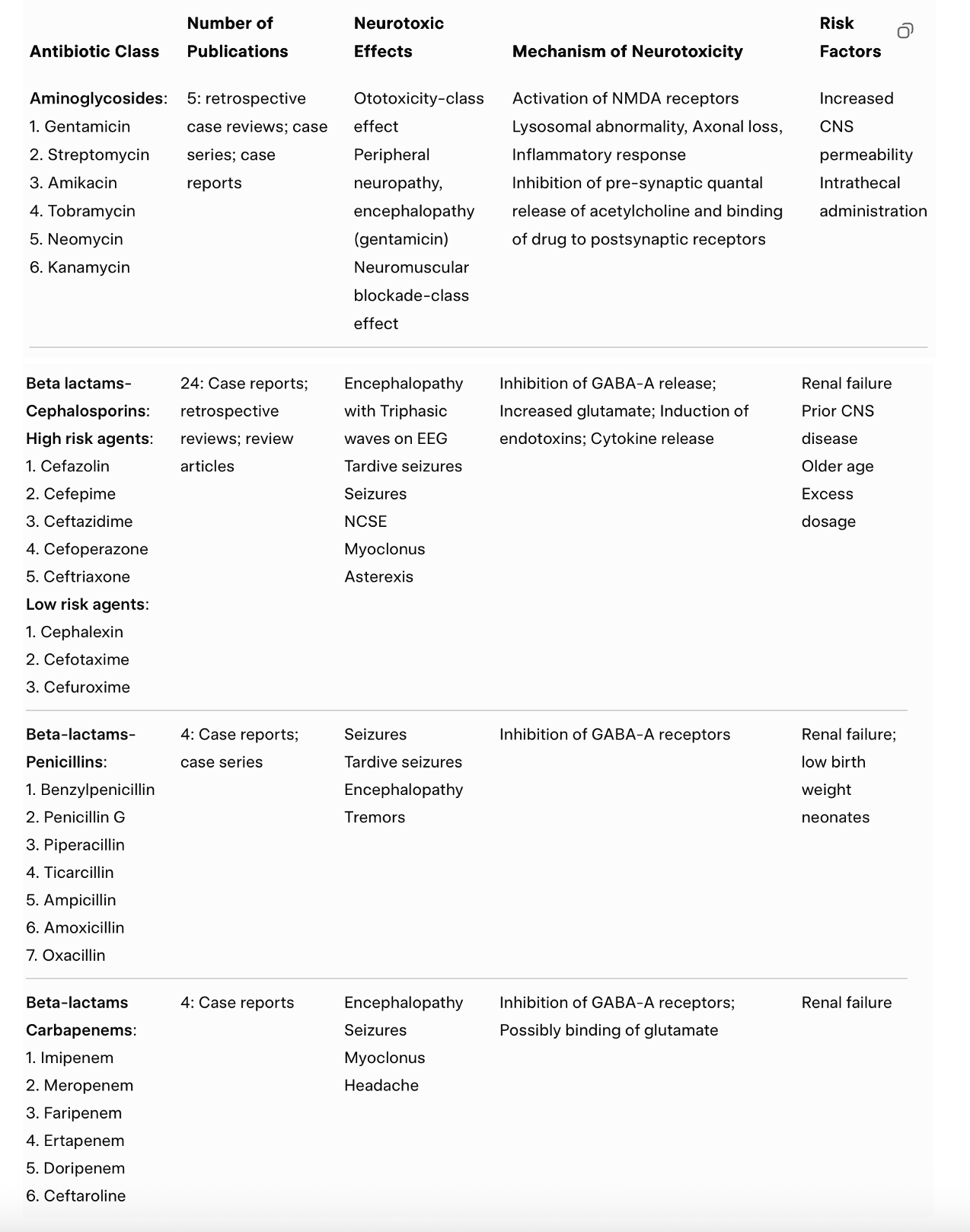
Within PFS/PSSD/PAS communities, both fluoroquinolones and doxycycline are discussed in relation to their potential interactions with CNS signaling pathways. For fluoroquinolones, mechanistic literature describes CNS excitation, including GABA-A receptor inhibition/antagonism (reducing inhibitory signaling) and effects that can increase excitatory neurotransmission, sometimes discussed alongside NMDA-related mechanisms. For doxycycline, one proposed (but debated) explanation involves possible serotonin-system involvement, including arguments that doxycycline may have serotonin-reuptake–inhibiting properties. These mechanisms may interact with GABA-A, neurosteroid, or serotonergic pathways that are often discussed in relation to PFS / PSSD / PAS. (fda) (pmc) (davidhealy) (pubmed) (accessdata)
-
Reports of Severe and Sometimes Lasting Worsening (for PFS/PSSD/PAS):
Among individuals who already have PFS/PSSD/PAS, fluoroquinolones and doxycycline are approached with significant caution as they are frequently cited in community reports as preceding symptom worsening, with accounts describing both acute exacerbations and longer-lasting declines in baseline. Although the severity and duration of these reactions vary between individuals, reports within this subgroup show a largely consistent direction toward worsening rather than improvement. In light of this pattern, many within the community view fluoroquinolones and doxycycline as carrying a meaningful risk for those with established PFS/PSSD/PAS, even in the absence of controlled data.
For individuals without these conditions, these antibiotics are widely prescribed and often effective, but there are still reports of significant CNS or psychiatric adverse effects in a minority of users. Given the uncertainty, individual susceptibility, and potential severity described in some reports, some people judge careful risk–benefit assessment and consideration of alternative antibiotic classes (when appropriate) to be prudent.
Evidence basis: Anecdotal reports (online forums, self-reports); regulatory safety communications and clinical literature; no controlled studies examining PFS/PSSD/PAS-specific outcomes.
-
Public comments reflect individual experiences and opinions. They are not medical advice and may not be accurate or representative.