Alcohol & Cannabis
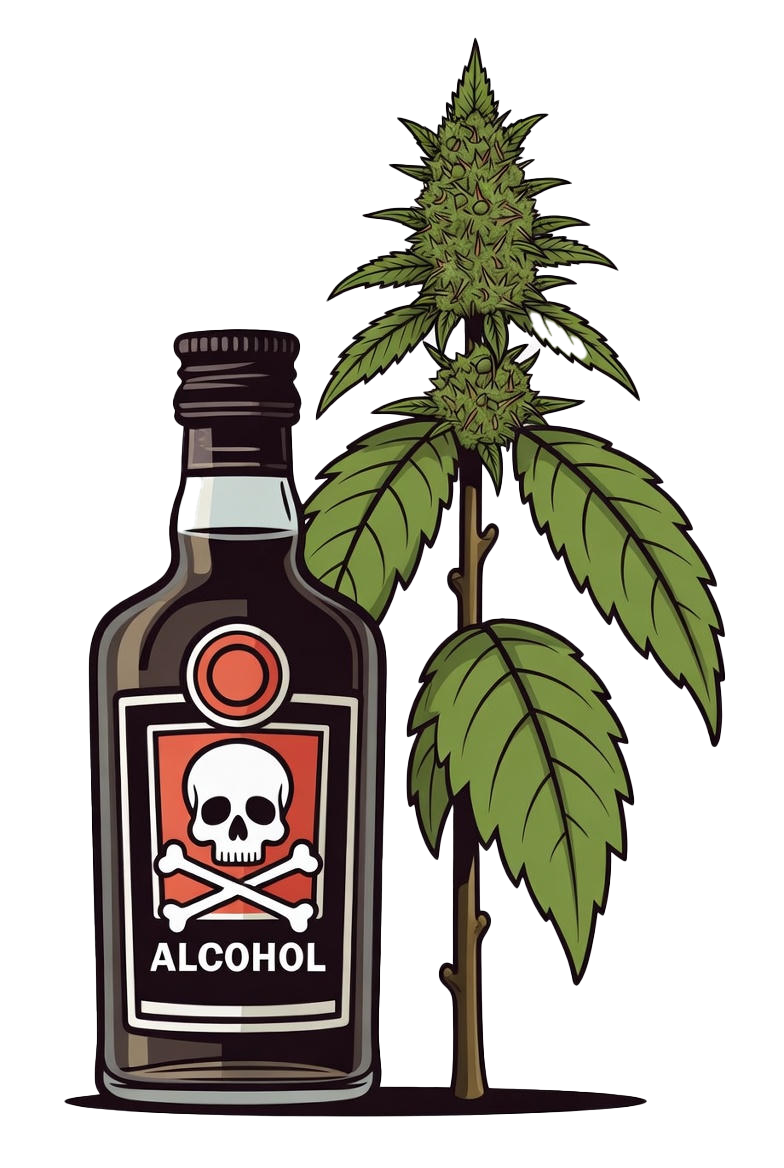
Alcohol is a widely consumed psychoactive substance that acts primarily as a central nervous system depressant. It affects multiple neurotransmitter systems and can alter mood, coordination, and judgment, with effects varying based on dose and individual sensitivity.
Marijuana refers to cannabis products that contain psychoactive compounds such as THC, which influence perception, mood, and cognition. It is commonly used recreationally and medically, though responses can vary widely and may include both calming and anxiety-provoking effects.
-
This page summarizes anecdotal reports and community observations, not medical evidence. Reports may be incomplete, biased or inaccurate and are not medical advice or recommendations. “Risk” here refers to how frequently severe or prolonged symptom worsening is reported, not to proven causation or population-wide probability. Individual responses vary widely, and absence of issues in some users does not rule out significant reactions in others.
-
Within PFS/PSSD/PAS communities, cannabis and alcohol are discussed in relation to their potential interactions with endocannabinoid, GABA-A, and androgen signaling pathways. Cannabis contains cannabinoids such as THC that act primarily on the endocannabinoid system (ECS), especially CB1 receptors in the brain and CB2 receptors in immune/peripheral tissues. The ECS interacts with multiple systems involved in mood, stress response, sleep, appetite, motivation, and sexual function, and it also interfaces with neuroendocrine regulation (including aspects of the hypothalamic–pituitary–gonadal axis). On the androgen side, there are mechanistic signals—for example, an older study reported cannabinoids inhibiting DHT binding to the androgen receptor in an in-vitro rat prostate model. Alcohol (ethanol) is a potent CNS-active drug that rapidly shifts neurochemistry—most notably by enhancing GABA-A signaling and reducing glutamate/NMDA signaling. It can also influence sex hormones and HPG-axis function. These mechanisms may interact with pathways involving endocannabinoid signaling, GABA-A/neurosteroid modulation, or androgen signaling that are often discussed in relation to PFS / PSSD / PAS. (pmc) (pubmed) (pmc2) (pmc3) (pubmed2) (frontiersin)
-
Reports of Symptom Flares Are Not Uncommon (for PFS/PSSD/PAS):
Among individuals who already have PFS/PSSD/PAS, cannabis and alcohol are commonly mentioned in community reports as potential triggers for symptom flares. Reports vary widely: some people feel temporary relief (sleep, anxiety), while others describe worsening anxiety, sleep disruption, emotional blunting, fatigue, or sexual symptoms—sometimes described as prolonged after heavier or repeated use. Community risk cues often include frequent/heavy cannabis use, high-THC products, and alcohol binge patterns, as well as next-day rebound effects.
For individuals without these conditions, cannabis and alcohol are widely used, but both can still cause mood, motivation, sleep, sexual, and anxiety-related adverse effects in a subset of users, especially at higher doses or with frequent use. Given the variability and the uncertainty described in some anecdotes, some people with PFS/PSSD/PAS choose to treat these as personal triggers and keep intake minimal or avoid them during stabilization.
Evidence basis: Anecdotal reports (online forums, self-reports); established neuropharmacology of alcohol and cannabinoids; mixed human data on endocrine outcomes; no controlled studies examining PFS/PSSD/PAS-specific outcomes.
-
Crash / Baseline Drop (Reported)
Mixed & Crash
Crash / Baseline Drop (Reported)
Crash / Baseline Drop (Reported)
Public comments reflect individual experiences and opinions. They are not medical advice and may not be accurate or representative.